
Quick Answer
TR19 cleaning usually refers to cleaning linked to the TR19 standards used for ventilation hygiene. For commercial kitchens, the key focus is TR19 Grease, which deals with fire risk management of grease build-up in kitchen extraction systems.
In plain English: if your kitchen extraction system collects grease, it needs to be inspected, cleaned and recorded properly.
What Is TR19 Grease?
TR19 Grease is the industry specification for managing fire risk from grease accumulation in commercial kitchen extraction systems.
BESA describes TR19 Grease as the definitive specification for managing fire risks linked to grease accumulation in commercial kitchen extraction systems. It supports cleaning, inspection and fire risk management for kitchen extract ventilation.
That sounds technical because it is. But the reason behind it is simple.
Commercial kitchens produce grease, smoke, steam and airborne cooking residue. Some of that ends up inside the extraction system. If it is not controlled, it can become a fire risk and an insurance problem as well as a hygiene issue.
Is TR19 The Same As A Kitchen Deep Clean?
No.
A commercial kitchen deep clean is wider. It can include appliances, floors, walls, ceilings, sinks, taps, grease traps, fridges, handles, tiles and high-level areas.
TR19 Grease is more specific. It focuses on the kitchen extraction system and the grease that builds up inside it.
The two often sit alongside each other, but they are not the same job.
What Parts Of The Kitchen Extraction System Are Involved?
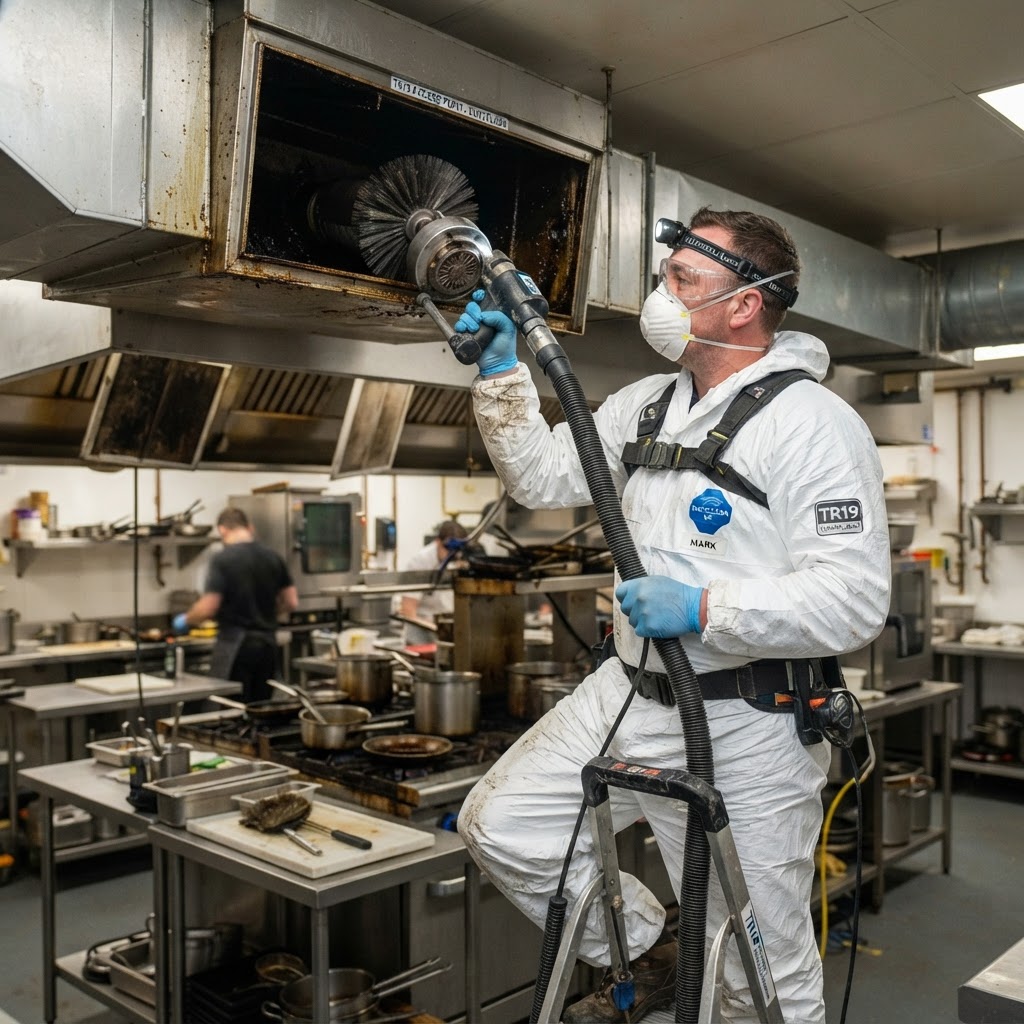
Depending on the system and access, cleaning may involve:
- Canopies
- Filters
- Extractor fans
- Ductwork
- Access panels
- Risers
- Plenums
- Grease collection points
- Surrounding extraction areas
The exact scope depends on the design of the extraction system. Some systems are straightforward. Others are awkward, older, longer or harder to access.
That is why a site review matters before anyone promises what can be cleaned, how long it will take or what evidence can be provided.
Why Does Grease Build-Up Matter?
Grease build-up matters for four main reasons.
Fire Risk
Grease deposits can increase fire risk inside extraction systems. That is the main reason TR19 Grease exists.
BESA explains that kitchen extract systems need specialised standards because of the fire safety risks linked to grease accumulation.
Insurance And Landlord Expectations
Insurers, landlords and property managers may ask for evidence that kitchen extraction systems have been cleaned and maintained properly. If documentation is missing, it can create problems after an incident or during renewal conversations.
Hygiene And Odour
Grease does not stay neat. It attracts dirt, traps odours and makes the kitchen harder to keep clean. If the extraction system is struggling, the whole kitchen can feel harder to manage.
Equipment Performance
Dirty extraction can affect airflow and make the system work harder. That can leave kitchens hotter, smellier and less comfortable for staff.
How Often Should TR19 Cleaning Be Done?
Cleaning frequency depends on use.
Important factors include:
- Hours of cooking each day
- Type of cooking
- Amount of grease produced
- Whether the kitchen uses fryers, grills or chargrills
- Extraction system design
- Past grease readings or cleaning history
- Insurer or landlord requirements
- Internal fire risk assessments
A quiet kitchen and a busy restaurant line will not need the same plan.
The safest answer is to inspect the system, understand the cooking load and agree a cleaning schedule that can be evidenced.
What Evidence Should You Receive?
After kitchen extraction cleaning, businesses should keep proper records.
Useful evidence may include:
- Date of clean
- Areas cleaned
- Before-and-after photos
- Any inaccessible areas
- Any access issues found
- Notes on grease build-up
- Recommendations for future cleaning frequency
- Certificate or report where applicable
The paperwork matters because it proves the clean happened and helps plan the next one.
If a contractor cannot explain what evidence you will receive, ask before booking.
Common TR19 Cleaning Mistakes
Only Cleaning What Is Easy To Reach
Canopies and visible filters matter, but the system does not stop there. Ductwork and hidden areas may need attention too.
Waiting Until There Is A Smell
Odour is a late sign. Grease can build up before anyone notices a strong smell.
Not Keeping Records
If there is no record, it is harder to prove what was cleaned, when it was cleaned and what should happen next.
Booking At The Wrong Time
Extraction cleaning needs access. If the kitchen is still hot, busy or full of staff trying to close down, the job becomes harder.
Treating TR19 As A One-Off
TR19 cleaning is not something to tick off once and forget. It should sit inside a planned maintenance and hygiene schedule.
How To Prepare For Kitchen Extraction Cleaning
Before the cleaning team arrives:
- Confirm shutdown times.
- Make sure equipment can cool.
- Clear access to canopies and ductwork points.
- Share any previous reports.
- Tell the contractor about known issues.
- Confirm alarm, keyholding and access arrangements.
- Agree who signs off the job.
- Ask what documentation will be provided.
Good preparation makes the clean smoother and reduces downtime.
How Pristine Can Help
Pristine Commercial Cleaning Services provides commercial kitchen cleaning across Yorkshire, including extractor fans, canopies and related ductwork where required.
The team understands that kitchen cleaning is not just about making stainless steel shine. It is about hygiene, safety, access, timing and evidence. For restaurants, hotels, schools, offices, colleges, universities, hospitals and canteens, that planning is what keeps cleaning from becoming chaos.
If you are not sure whether your extraction system needs TR19 cleaning, ask Pristine for advice and a site-specific quote.
FAQs
What is TR19 cleaning?
TR19 cleaning refers to ventilation hygiene standards. In commercial kitchens, the most relevant standard is TR19 Grease, which focuses on managing fire risk from grease accumulation inside kitchen extraction systems, including ductwork and related extraction components.
Is TR19 cleaning a legal requirement?
TR19 Grease is an industry specification rather than a single law. However, it supports fire safety, health and safety, insurance and property-management expectations. Many businesses use it as evidence that kitchen extraction cleaning has been planned and managed responsibly.
How often should kitchen extraction systems be cleaned?
Frequency depends on how heavily the kitchen is used, the type of cooking, grease levels, extraction design and insurer or landlord requirements. A busy commercial kitchen will usually need a more frequent cleaning schedule than a low-use catering space.
What proof should I get after TR19 cleaning?
You should keep a clear record of the clean, including date, areas cleaned, photos where useful, access limitations, findings and recommendations for the next clean. This evidence can help with audits, insurance discussions, landlord requests and internal maintenance records.