Back to News
Company News
Pristine Cleaning Services
School Cleaning Services in Yorkshire: What a Good Contract Should Include
Planning school cleaning services in Yorkshire? See what a clear contract should cover, from classrooms and washrooms to COSHH and quality checks.
## Quick answer
School cleaning is not simply about making classrooms look tidy before pupils arrive.
A school is a busy working environment with classrooms, washrooms, corridors, staff areas, dining spaces, entrances, sports facilities and shared equipment. Every area is used differently, which means every area needs a clear cleaning standard and schedule.
A good school cleaning contract should explain exactly what is being cleaned, how often it will be cleaned, who is responsible and how the standard will be checked.
If the specification is vague, the results usually become vague too.
## What should school cleaning include?
The exact cleaning plan will depend on the size and layout of the school, but most specifications should consider the following areas.
### Classrooms
Classroom cleaning may include:
- Emptying bins
- Cleaning floors
- Wiping desks and accessible surfaces
- Cleaning door handles and common touchpoints
- Removing visible marks
- Cleaning sinks where present
- Checking corners, edges and areas underneath furniture
The schedule should also clarify what cleaners can move and what must remain in place.
A cleaner cannot thoroughly clean a surface that is covered with books, paperwork, equipment and personal belongings. Clear expectations for teaching staff and cleaning staff make the service easier to manage.
### Washrooms
School washrooms need consistent attention.
The cleaning plan should cover:
- Toilets and urinals
- Sinks and taps
- Cubicle doors and handles
- Mirrors
- Floors
- Soap, paper and hygiene-product restocking
- Bins and sanitary disposal
- Odour checks
- Periodic deeper cleaning
Washrooms should not be treated as one quick task at the end of a shift. They need enough time, suitable products and a clear standard.
### Corridors, entrances and communal areas
These are usually some of the highest-traffic parts of a school.
Mud, rainwater, grit and general dirt can quickly affect floors and entrance areas during autumn and winter. Cleaning arrangements may need to change according to the weather, pupil numbers and how different parts of the building are used.
Entrance matting, floor cleaning, internal glass and visible marks should all be considered.
### Dining areas and kitchens
Dining halls, serving areas and staff kitchens need a plan that reflects food use, waste and footfall.
This may include:
- Tables and chairs
- Floors
- Food spillages
- Bins and waste points
- Sinks and taps
- Appliance fronts
- Handles and touchpoints
- Periodic deep-cleaning work
The responsibilities of the cleaning contractor, catering team and site team should be clearly separated.
### Sports halls and changing facilities
Sports facilities often need different cleaning methods from classrooms.
The plan may need to include:
- Sports floors
- Benches
- Changing rooms
- Showers
- Toilets
- Lockers
- Internal glass
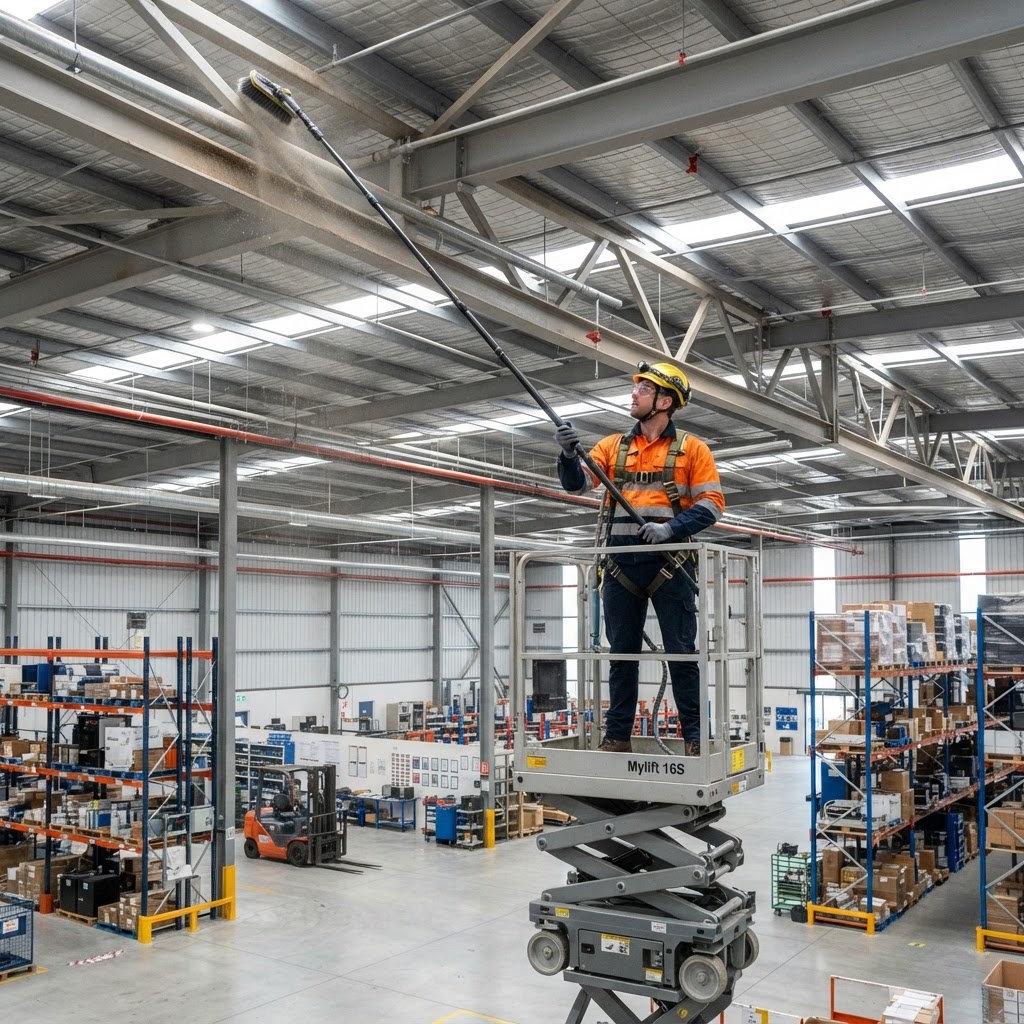
- High-level dust
- Periodic machine cleaning
The products and equipment used must also be suitable for the flooring and surfaces.
## Daily, weekly and periodic school cleaning
Not every task needs to happen every day.
A better specification separates cleaning into frequencies.
### Daily tasks
These may include:
- Washrooms
- Bins
- Floors in heavily used areas
- Classrooms
- Dining spaces
- Touchpoints
- Entrances
- Staff kitchens
### Weekly tasks
These may include:
- Detail cleaning around furniture
- Internal glass
- Low-level ledges
- Less frequently used rooms
- Door frames and skirting
- Deeper floor attention in selected areas
### Periodic tasks
These may include:
- Carpet extraction
- Floor refinishing
- High-level cleaning
- Sports hall deep cleaning
- Window cleaning
- Kitchen deep cleaning
- Washroom descaling
- External pressure cleaning
- Holiday deep cleans
This stops deeper work from being squeezed into an ordinary daily shift.
## Why school holidays matter
School holidays offer access that is difficult to achieve during term time.
Desks can be moved, floors can be treated properly and high or awkward areas can be reached without working around pupils and teaching staff.
A holiday clean may be used to:
- Reset classroom standards
- Deep clean washrooms
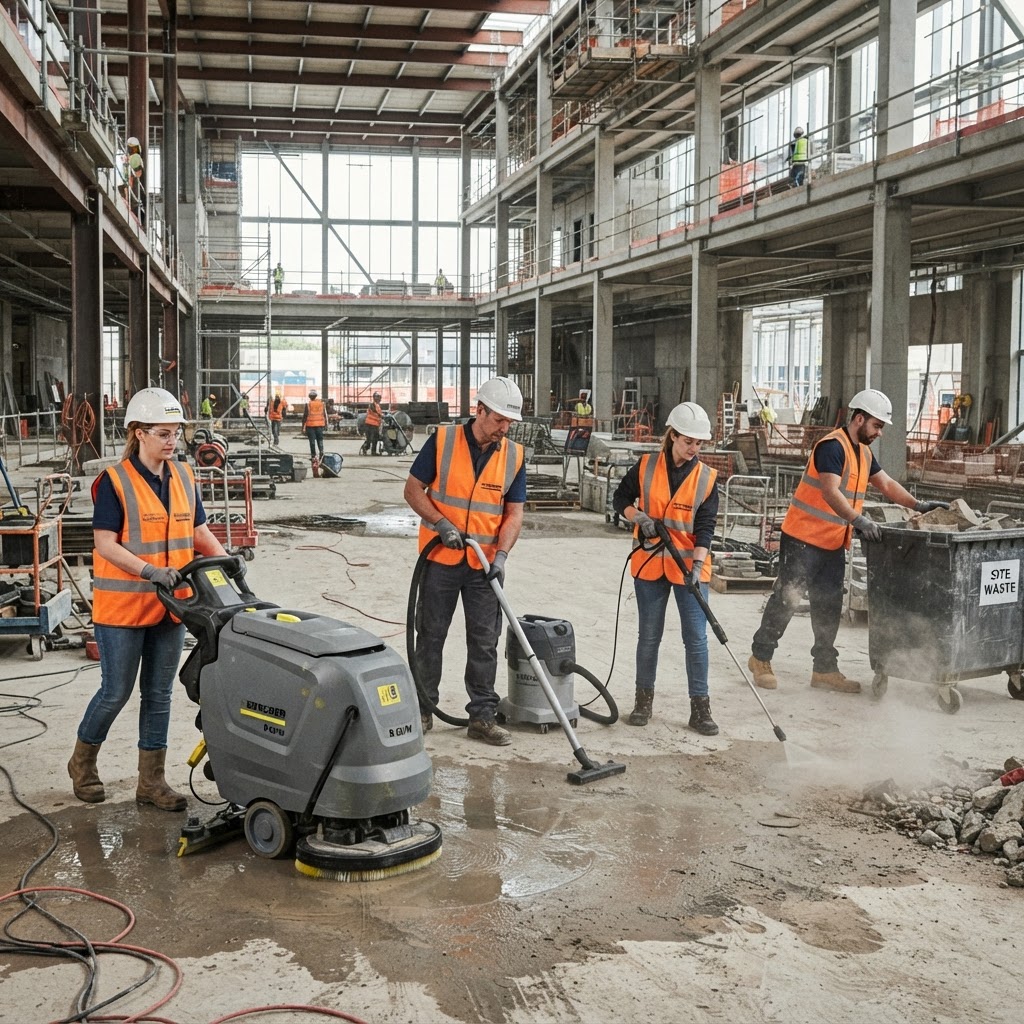
- Machine-clean hard floors
- Extract carpets
- Clean sports facilities
- Address high-level dust
- Clean internal glazing
- Complete work that requires drying or restricted access
The school should agree the exact areas and expected finish before the work begins.
## COSHH and cleaning products in schools
Cleaning products need to be managed properly.
Department for Education guidance says cleaning products and chemicals used by schools must be labelled and stored in accordance with COSHH requirements. It also advises schools to plan changes to cleaning arrangements carefully.
A cleaning contractor should be able to explain:
- Which products are being brought onto the site
- Where those products will be stored
- How products are labelled
- Who is trained to use them
- What personal protective equipment is required
- What happens if there is a spillage
- How concentrated products are diluted
- How empty containers and waste are handled
Cleaning products should never be left where pupils or unauthorised staff can access them.
## Quality control and contract management
The cleaning specification should explain how standards will be inspected and managed.
This can include:
- Daily or scheduled supervisor checks
- A clear issue-reporting process
- Agreed response times
- Attendance and timekeeping checks
- Stock-level monitoring
- Equipment maintenance
- A process for planned and unplanned absence cover
- Regular client review meetings
The Department for Education also advises schools to consider quality assurance, timekeeping, absence management, stock levels and equipment maintenance when procuring cleaning services.
These details help the school compare more than the headline price.
## What should schools ask before appointing a cleaning company?
Before agreeing a contract, ask:
- Will you carry out a site survey?
- Have you worked in education settings before?
- What is included in the daily specification?
- Which tasks are periodic rather than daily?
- How will standards be checked?
- Who manages the cleaning team?
- How are staff absences covered?
- Can you work around term dates and holiday access?
- How do you manage COSHH?
- What site information and access arrangements do you need?
- How are complaints or missed tasks handled?
- Can you provide specialist cleaning when required?
A good provider should be comfortable answering these questions clearly.
## School cleaning built around the actual site
No two schools operate in exactly the same way.
A small primary school, a secondary school, a sixth-form college and a multi-academy trust may all need different staffing, frequencies and management arrangements.
Pristine Cleaning Services builds cleaning plans around the building, the timetable and the standard the organisation needs to maintain.
For school cleaning across Doncaster and the wider Yorkshire region, request a site survey and talk through the areas that are currently causing the most difficulty.
## School cleaning FAQs
### How often should a school be professionally cleaned?
Most active school areas will need cleaning each operational day. The precise frequency depends on footfall, room use, pupil numbers and the type of space. Washrooms, dining areas, entrances and heavily used classrooms normally need the most consistent attention.
### Can school cleaners work during holidays?
Yes. Holidays are often the best time for carpet cleaning, floor treatments, high-level work and deeper cleaning because the team has better access and causes less disruption.
### What information is needed for a school cleaning quote?
Provide the building layout, pupil numbers, operating hours, current cleaning schedule, floor types, number of washrooms, dining facilities, sports areas, holiday access and any current problem areas. A site visit will usually produce a more accurate specification than photographs alone.