Back to News
Company News
Pristine Cleaning Services
Warehouse Cleaning Before Peak Season: What Site Managers Should Plan
Preparing a warehouse for peak season? Review floors, loading bays, racking, welfare areas, waste and cleaning access before activity increases.
## Quick answer
A warehouse becomes harder to clean once activity increases.
More deliveries, more vehicle movement, more packaging, fuller storage areas and tighter shift patterns all reduce the windows available for cleaning.
That is why warehouse cleaning should be reviewed before the busiest part of the year begins, not once standards have already slipped.
The aim is not simply to make the site look better. It is to remove built-up dirt, improve access to difficult areas and put a workable routine in place before the operation becomes more demanding.
## Start with a site walk
The first step is to walk the warehouse with both operations and cleaning in mind.
Look at:
- Pedestrian routes
- Vehicle routes
- Loading bays
- Racking
- Picking areas
- Packing stations
- Goods-in and dispatch
- Waste points
- External yards
- Staff welfare areas
- Toilets and changing rooms
- Offices
- High-level structures
- Areas behind fixed equipment
The warehouse manager will usually know where dirt builds up, where access is difficult and which areas cannot be taken out of use during normal operating hours.
That information should shape the cleaning plan.
## Review floors and pedestrian routes
Warehouse floors collect dust, debris, packaging, tyre marks, oil and spillages.
The cleaning method must reflect the type of floor and the activity taking place.
A useful plan should consider:
- Routine sweeping or vacuuming
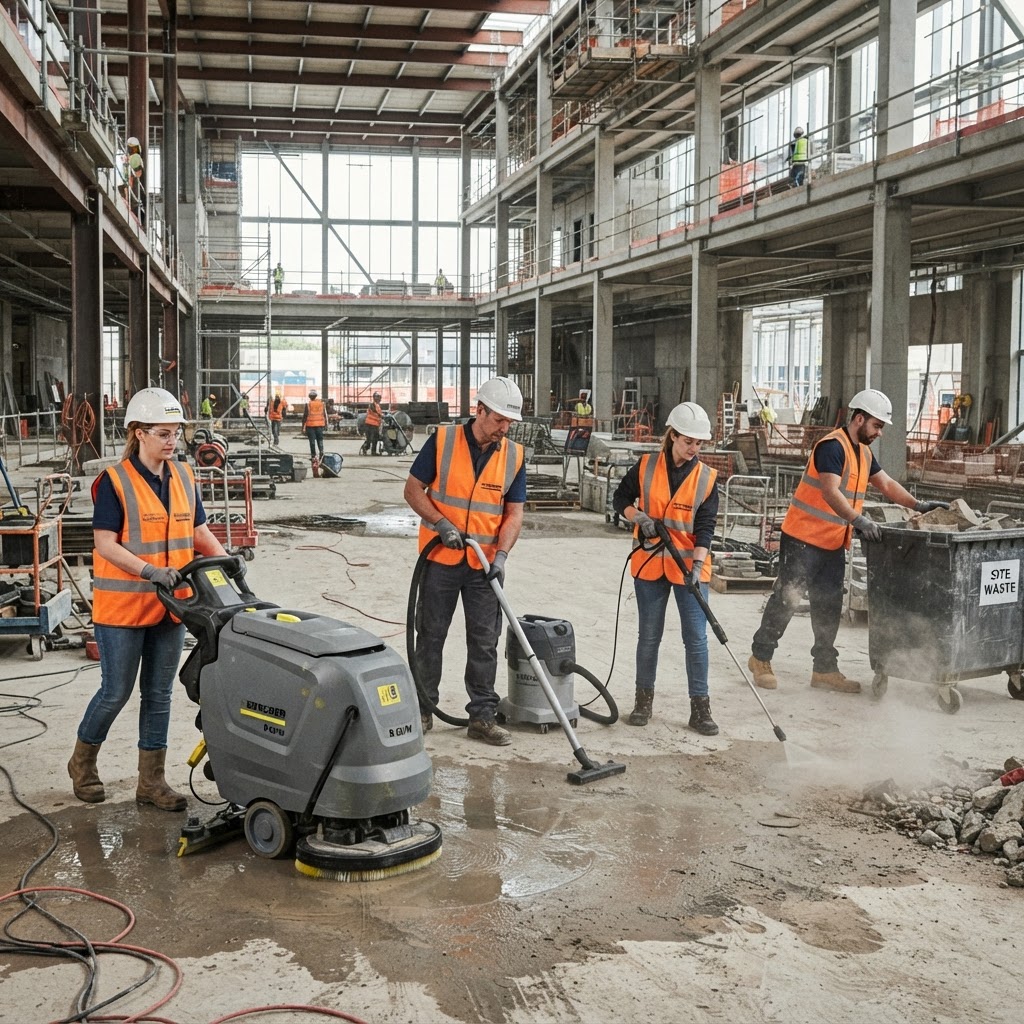
- Mechanised floor cleaning
- Spill response
- Edge and corner cleaning
- Floor markings
- Pedestrian walkways
- Areas underneath accessible racking
- Cleaning around charging points
- Drying time
- Warning signage
HSE guidance explains that contamination is involved in almost all slip accidents. It advises organisations to identify where contamination is coming from and use the correct cleaning process rather than allowing spills or residues to remain.
The goal is not to clean a floor in a way that creates a fresh hazard. Equipment, timing and drying all matter.
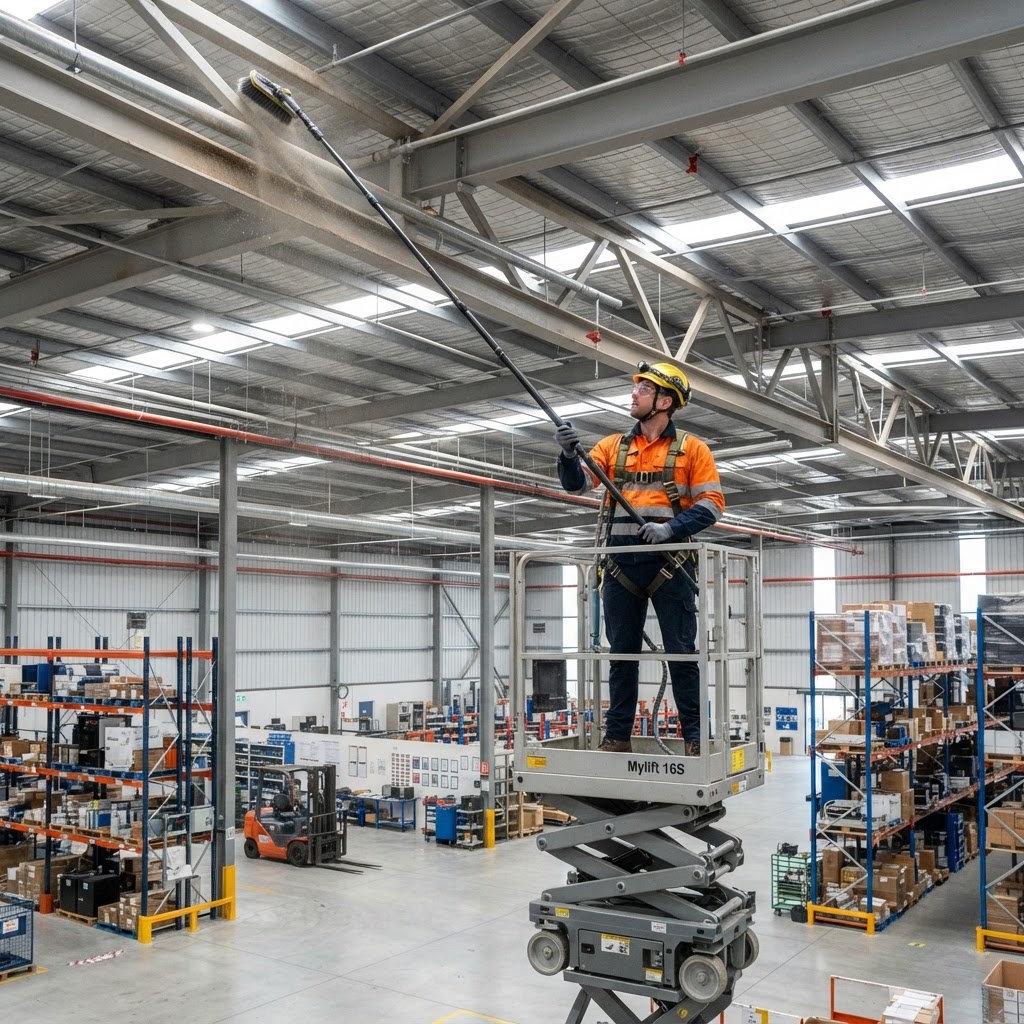
## Do not ignore high-level dust
Warehouse dirt does not stay at floor level.
Dust can settle on:
- Racking tops
- Beams
- Lighting
- Ducting
- Pipework
- Internal cladding
- Cable trays
- Sprinkler pipework
- Signage
- Ledges above doors
Once activity increases, disturbance and air movement may bring some of that settled dust back into the working environment.
High-level cleaning usually needs to be planned separately from the routine contract. Access equipment, isolation arrangements and safe working areas may be required.
It should not be left until the warehouse is at its fullest and access is at its most difficult.
## Use the right method for warehouse dust
Blowing dust from one area to another is not cleaning.
The right method will depend on:
- What the dust contains
- The surfaces being cleaned
- The products stored
- Ventilation
- Nearby workers
- Machinery
- Fire and electrical risks
- The site's risk assessments
Suitable vacuuming or damp methods may be more appropriate than dry brushing or compressed air, particularly where the process could make settled dust airborne.
A professional contractor should ask these questions before starting.
## Loading bays and external areas
Loading bays can be difficult to clean because they are rarely quiet.
The plan may need to include:
- Delivery schedules
- Trailer movements
- Dock equipment
- Edge protection
- Spill kits
- Packaging waste
- Drainage
- External dirt and mud
- Oil marks
- Pedestrian access
- Lighting and signage
This is a practical scheduling issue. A cleaning team cannot safely or effectively clean a bay while vehicles and loading equipment are continuously moving through it.
Where possible, loading bay work should be scheduled during a quieter operational window or with the area temporarily released to the cleaning team.
## Welfare areas need their own specification
It is easy for the operational space to receive all the attention while staff facilities fall behind.
Warehouse welfare cleaning should consider:
- Toilets
- Changing rooms
- Showers
- Break rooms
- Canteens
- Kitchens
- Vending areas
- Lockers
- Office spaces
- Entrances
These areas often need daily cleaning even when deeper warehouse cleaning happens less frequently.
They also need a clear replenishment process for soap, paper and other consumables.
## Plan waste before volumes rise
Packaging, strapping, pallets and general waste can quickly affect walkways and cleaning access.
Before peak season, review:
- Bin locations
- Waste separation
- Collection frequency
- Overflow arrangements
- Damaged goods
- Pallet storage
- Cardboard accumulation
- Shrink wrap and strapping
- External waste compounds
- Cleaning around compactors and skips
HSE guidance for production areas highlights that strapping, wrapping and loose paper can create slip and trip hazards when they are not disposed of properly.
Cleaning and waste responsibilities should not be left between departments. Everyone should know who empties what, who reports overflow and who deals with a spill or damaged container.
## Build cleaning around the operation
A warehouse cleaning schedule should work with the site, not against it.
Possible cleaning windows include:
- Shift changes
- Weekends
- Planned maintenance periods
- Reduced-volume days
- Overnight windows
- Temporary aisle closures
- Shutdown periods
The contractor should know which routes must remain open, where machinery will be operating and who has authority to release an area for cleaning.
## What should a peak-season warehouse clean include?
The scope may include:
- Mechanical floor cleaning
- Edges and corners
- Loading bays
- Racking bases
- High-level dust
- Staff welfare facilities
- Internal glass
- Waste areas
- External approaches
- Offices
- Touchpoints
- Difficult areas behind or beneath equipment
The final specification should show what is included, what is excluded and which tasks require separate access arrangements.
## What should site managers ask the contractor?
Before work begins, ask:
- Which areas need to be isolated?
- What equipment will be used?
- What access equipment is required?
- Can work be phased around shifts?
- How will wet floors and spillages be controlled?
- What information is needed about stored products or site dust?
- Which tasks are included in the routine contract?
- Which tasks need a separate deep clean?
- How will the completed work be checked?
- What support is needed from the site team?
These questions help prevent delays and make the quote more accurate.
## Prepare the warehouse before it becomes busier
The best time to address warehouse cleaning is while there is still space to plan it properly.
Pristine Cleaning Services supports warehouses, factories and industrial sites across Yorkshire with routine cleaning, deep cleans, high-level work and site-specific cleaning schedules.
Request a site survey before the busiest period begins so the work can be planned around vehicles, shifts, stock and operational access.
## Warehouse cleaning FAQs
### Can warehouse cleaning take place while the site is operating?
Some routine work can take place during operations, but machinery movement, vehicle routes and pedestrian access must be considered. Larger floor cleans, loading bay work and high-level cleaning may need restricted access or an out-of-hours window.
### How often should warehouse floors be cleaned?
The frequency depends on traffic, floor type, products handled and contamination levels. High-use routes may need daily attention, while deeper machine cleaning can be scheduled weekly, monthly or periodically.
### Is high-level cleaning included in normal warehouse cleaning?
Not always. High-level cleaning often needs separate equipment, planning and access controls. It should be clearly included or excluded from the cleaning specification.